
このページの内容
- **head-to-head** は、**直接対決の**、**一対一の**、**正面から競い合う**という意味です。 - 形容詞としては、2人・2チーム・2社などが**直接対峙して競う**ことを表します。 - 副詞としては、**真正面から、直接**競い合う様子を表します。 - 名詞としては、**直接対決**、**一騎打ち**、**対戦**の意味で使われます。 例: - **head-to-head competition** = 直接対決の競争 - **go head-to-head with A** = Aと正面から対決する - **head-to-head battle/clash** = 一騎打ちの戦い 自然な日本語では、文脈に応じて **「直接対決」**、**「一騎打ち」**、**「正面対決」**、**「1対1」** と訳すのが一般的です。
- **SEO**のほうが基本的には有利です。検索結果で見つけてもらう土台を作るのがSEOで、Googleも高品質でユーザー中心のコンテンツ、サイト構造、URLやタイトル、メタディスクリプション、画像の最適化、クロールやインデックス可能性の確保を重視しています。 ただし、**何と比較して「better」か**で答えは変わります。 - **SEO vs Google Ads** なら、SEOは長期的な検索流入に強く、Google Adsは短期で即効性があります。 - **オンページSEO vs テクニカルSEO** なら、まずは**テクニカルSEO**が土台で、Googleがクロール・インデックスできなければ内容を最適化しても意味がありません。 - **ツールやCMSの比較** なら、最適解は目的次第で、Semrushは総合力、Ahrefsは被リンク・競合分析、WordPressはSEOの制御性が強いとされています。 もしあなたの質問が「**SEO施策の中で何が一番重要か**」という意味なら、優先順位は**技術的な基盤** → **高品質なコンテンツ** → **内部リンクや権威性の強化**です。
- **Switch** when you’ve stopped learning, your role is no longer growing you, or the downside has started to outweigh the benefit. A common rule of thumb is to stay at least **2 years**, with **3-5 years** often cited as the sweet spot for building credibility and showing impact - but the real signal is whether the job still supports your growth. Key signs it may be time: - You haven’t learned a new skill in about **18 months**. - Your manager has no concrete plan for your next step. - You feel resentful, plateaued, unseen, or drained rather than engaged. - You can’t picture yourself in the same role two years from now without losing motivation. - Your salary or responsibilities have stalled despite consistent impact. If you want, I can also give you a **job-switch checklist** or answer this for a specific context, like **career switches, jobs, broadband, or energy plans**.
- よくある質問
**head-to-head** は、**直接対決の**、**一対一の**、**正面から競い合う**という意味です。 - 形容詞としては、2人・2チーム・2社などが**直接対峙して競う**ことを表します。 - 副詞としては、**真正面から、直接**競い合う様子を表します。 - 名詞としては、**直接対決**、**一騎打ち**、**対戦**の意味で使われます。 例: - **head-to-head competition** = 直接対決の競争 - **go head-to-head with A** = Aと正面から対決する - **head-to-head battle/clash** = 一騎打ちの戦い 自然な日本語では、文脈に応じて **「直接対決」**、**「一騎打ち」**、**「正面対決」**、**「1対1」** と訳すのが一般的です。
| WordPress | 静的サイト(Hugo) | |
|---|---|---|
| 速度 | ページごとに DB + PHP + プラグインで都度再構築 | CDN 上に事前生成された HTML - ミリ秒単位のレスポンス |
| セキュリティ | プラグインが最大の攻撃対象 | DBもプラグインもなし - 攻撃対象となるものがほぼない |
| ホスティング費用 | マネージド環境で月額 $20〜$200以上 | 無料〜低価格な CDN |
| メンテナンス | 絶え間ないアップデートと互換性問題 | 更新の必要なし - ただのファイル |
| 所有権 | プラグイン/ホスティングへのロックイン | ソースコードを自分で完全に所有 |
| 編集 | 馴染みのある管理画面 UI | Markdown / Git(またはヘッドレス CMS) |
正直なトレードオフがひとつあります。WordPress の方が編集画面の UIに慣れやすいという点です。ただ、多くのコンテンツサイトやマーケティングサイトにとっては、桁違いに速く、安全で、安くなることを考えれば、その慣れやすさを手放す「コスト」はごく小さいと言えます。
**SEO**のほうが基本的には有利です。検索結果で見つけてもらう土台を作るのがSEOで、Googleも高品質でユーザー中心のコンテンツ、サイト構造、URLやタイトル、メタディスクリプション、画像の最適化、クロールやインデックス可能性の確保を重視しています。 ただし、**何と比較して「better」か**で答えは変わります。 - **SEO vs Google Ads** なら、SEOは長期的な検索流入に強く、Google Adsは短期で即効性があります。 - **オンページSEO vs テクニカルSEO** なら、まずは**テクニカルSEO**が土台で、Googleがクロール・インデックスできなければ内容を最適化しても意味がありません。 - **ツールやCMSの比較** なら、最適解は目的次第で、Semrushは総合力、Ahrefsは被リンク・競合分析、WordPressはSEOの制御性が強いとされています。 もしあなたの質問が「**SEO施策の中で何が一番重要か**」という意味なら、優先順位は**技術的な基盤** → **高品質なコンテンツ** → **内部リンクや権威性の強化**です。
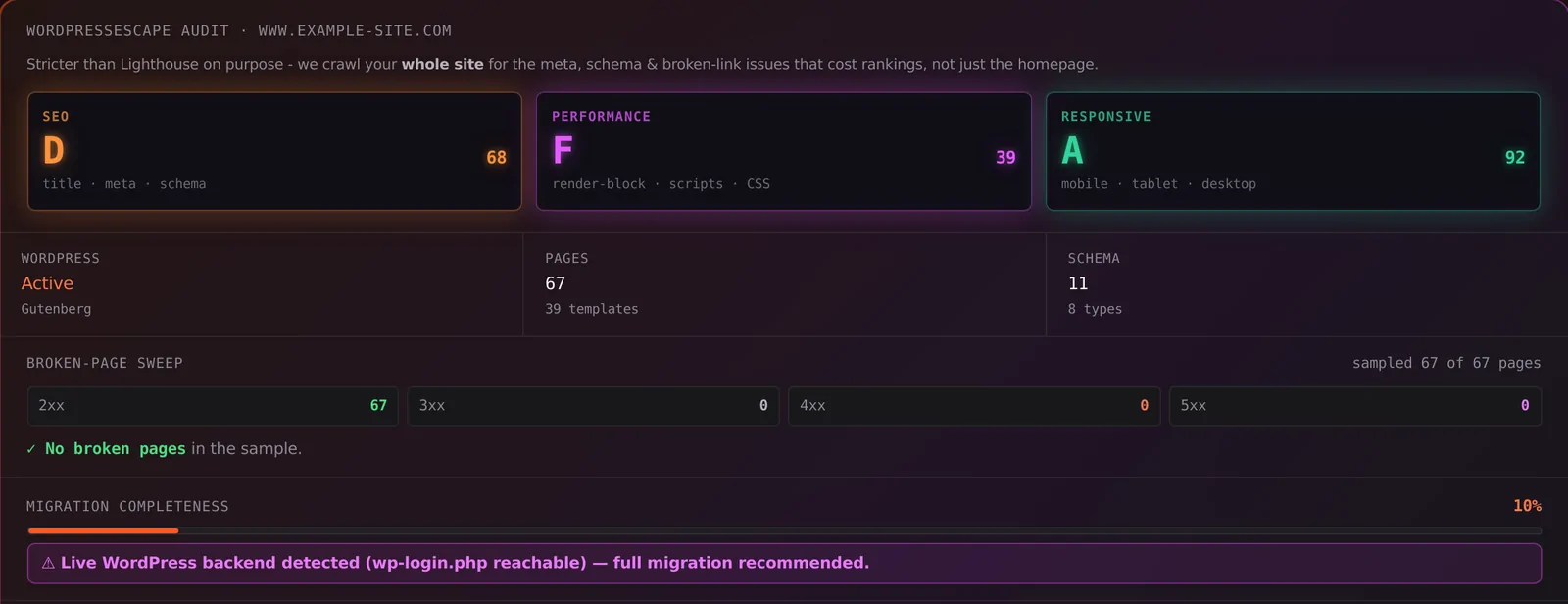
Googleが実際に測定するシグナルでは、静的サイトのほうが有利です。Core Web Vitalsはランキング要因であり、静的サイトはデータベース駆動のWordPressページよりも高速に読み込まれます。静的サイトはSEOに悪い、というのは誤解です。タイトル、meta、canonical、schemaはそのまま維持でき、しかもより速く配信できます。<a href="/migrate-wordpress-without-losing-seo/">SEOを損なわずに移行する方法</a>をご覧ください。
**Switch** when you’ve stopped learning, your role is no longer growing you, or the downside has started to outweigh the benefit. A common rule of thumb is to stay at least **2 years**, with **3-5 years** often cited as the sweet spot for building credibility and showing impact - but the real signal is whether the job still supports your growth. Key signs it may be time: - You haven’t learned a new skill in about **18 months**. - Your manager has no concrete plan for your next step. - You feel resentful, plateaued, unseen, or drained rather than engaged. - You can’t picture yourself in the same role two years from now without losing motivation. - Your salary or responsibilities have stalled despite consistent impact. If you want, I can also give you a **job-switch checklist** or answer this for a specific context, like **career switches, jobs, broadband, or energy plans**.
WordPress の限界を感じたら乗り換えどきです。キャッシュ系プラグインでは速度が改善されない、セキュリティパッチ対応に疲れた、コストに見合った成果が出ていない──そんなときは切り替えを検討しましょう。もしあなたのサイトがブログ、マーケティングサイト、地域ビジネス、ドキュメント、ポートフォリオなど「コンテンツ中心」の構成なら、静的サイトへの再構築が最適なアップグレードです。まずはどんな形で移行できるかを確認し、そのあとでWordPress を手放す方法を読んでみてください。
よくある質問
**Yes, usually.** A static site is generally faster than WordPress because it serves pre-built HTML directly, while WordPress typically has to run PHP and query a database to generate each page.
That said, the gap depends on how WordPress is configured. With aggressive caching and optimization, WordPress can get much closer to static-site speed, and some measurements show the difference becomes small enough to be hard to notice on a real connection.
In practical terms:
- **Static sites** are faster by default and often load in under a second.
- **WordPress** can still be fast, especially when optimized, but it usually needs extra setup to reach similar performance.
- For raw speed alone, static architecture usually wins.
**Almost always.** A static site serves pre-built HTML from a CDN, while WordPress rebuilds each page from a database with PHP and plugins; that architectural difference is why static sites are typically much faster, often in the sub-second range, while WordPress commonly takes longer unless it is heavily optimized and cached. If you want, I can also turn this into a more polished marketing line or a shorter comparison sentence.
Yes - **generally, a static site is more secure than WordPress** because it has a much smaller attack surface: no database, no public login page, and no server-side code or plugins to exploit. WordPress is not inherently insecure, but most vulnerabilities come from plugins and themes, and it requires regular updates to stay safe.
A static site mainly serves prebuilt files, so common attacks like SQL injection, PHP exploits, and brute-force login attempts largely do not apply. By contrast, WordPress introduces more moving parts - core, themes, plugins, admin access, and a database - which creates more opportunities for compromise if anything is outdated or poorly managed.
That said, *“more secure” does not mean “unhackable.”* A static site can still be affected by issues such as DNS hijacking, compromised build pipelines, or weaknesses in the hosting/CDN layer. A well-maintained WordPress site can also be secure, especially with timely patching, careful plugin selection, and good hosting practices.
{"translations":[{"source":"Yes. With no database and no plugins, a static site removes the attack surfaces that WordPress sites get hacked through. There's essentially nothing to exploit.","target":"はい。データベースもプラグインもない静的サイトなら、WordPressサイトが侵入される原因となる攻撃対象領域を取り除けます。実質的に、狙うべきものはほとんどありません。"}]}
いいえ、**完全には同じではありません**。静的サイトでもブログ、ページ、画像、フォーム、検索など多くのことはできますが、**WordPressの標準機能をそのまま全部置き換えられるわけではありません**。
静的サイトは、あらかじめ生成したHTMLを配信する仕組みなので、表示は速く、運用も軽く、セキュリティ面でも有利です。 一方でWordPressは、PHPとデータベースでページを動的に生成するため、**ログイン、会員制コンテンツ、サーバー側のカートやチェックアウト、複雑な管理画面、非技術者による頻繁な更新**のような用途に向いています。
静的サイトでWordPressに近い体験を実現することは可能です。たとえば、ヘッドレスCMS、JavaScript、外部サービスを組み合わせれば、フォーム送信、コメント、検索、会員機能の一部を補えます。 ただしその場合は、**機能ごとに別サービスや追加実装が必要**になり、WordPressの「1つのCMSで完結する」手軽さは失われやすいです。
要するに、**コンテンツ中心のサイトなら静的サイトで十分なことが多い**一方、**編集のしやすさや高度な動的機能まで含めて考えるならWordPressのほうが向いている**、という整理です。
はい、**コンテンツ系・マーケティング系サイト**なら十分に対応できますし、むしろ**高速化**できます。ログインや複雑なECのような本当に動的な機能は専用サービスで処理し、**ページ自体は静的**なままに保つ設計です。